Amid the accelerating escalation across the Middle East, one question dominates strategic calculations from Washington to Riyadh: Is the United States sliding inexorably toward direct military confrontation with Iran? The return of Donald Trump to the corridors of power has intensified speculation about the region's trajectory, fueling debate over whether the Gulf stands at the …
The Gulf’s Tipping Point: Why America May Soon Face Its Costliest War
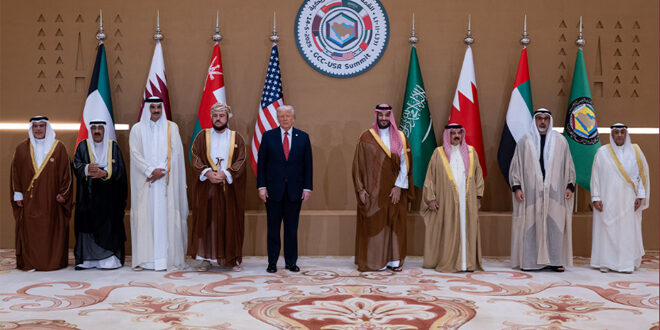
Amid the accelerating escalation across the Middle East, one question dominates strategic calculations from Washington to Riyadh: Is the United States sliding inexorably toward direct military confrontation with Iran? The return of Donald Trump to the corridors of power has intensified speculation about the region’s trajectory, fueling debate over whether the Gulf stands at the precipice of a strategic transformation that could fundamentally recalibrate global power dynamics.
For years, American strategy has rested upon a precarious equilibrium-economic strangulation through sanctions coupled with calibrated military deterrence, all while avoiding the quagmire of full-scale engagement. Yet this delicate architecture is cracking under the weight of new realities. Precision strikes against Saudi Arabia’s critical infrastructure have demonstrated Tehran’s capacity to inflict catastrophic economic damage without triggering massive retaliation. Riyadh now confronts an unenviable dilemma: persist with a containment policy that hemorrhages billions in lost revenue, or escalate toward a confrontation that might finally impose effective deterrence but risks regional conflagration.
The prospect of American boots on Iranian soil-long dismissed as political suicide given the searing memories of Iraq and Afghanistan-has quietly reentered strategic discourse. This represents more than a tactical shift; it signals a potential paradigm change. A ground war with Iran would differ fundamentally from previous American interventions. Tehran commands not merely a conventional military machine but a sophisticated network of proxies spanning Lebanon to Yemen, capable of transforming any conflict into a multi-front nightmare. The decision to engage would thus constitute a strategic watershed, demanding calculations far exceeding the logic of immediate retaliation.
Parallel to these unilateral considerations runs the tantalizing possibility of a unified Gulf coalition-American firepower married to regional forces from the Emirates, Bahrain, and Saudi Arabia under centralized command. The vision appeals to strategic optimists who see in collective action a path to burden-sharing and legitimacy. Yet reality proves more obstinate. Divergent threat perceptions, competing national interests, and the Gulf states’ historical aversion to direct confrontation with their Persian neighbor render this scenario fraught with complications. Coordination has reached unprecedented heights in recent years, yes-but the chasm between defensive alignment and offensive alliance remains vast and treacherous.
Beneath these military calculations lurks a persistent tension in the Washington-Gulf relationship. Critics reduce this partnership to a crude transaction: petrodollars exchanged for American security guarantees. Such reductionism obscures a more intricate reality. The ties binding these capitals encompass energy security, maritime commerce protection, and the preservation of a regional order that serves mutual interests. Yet as Iranian capabilities expand and American commitment wavers, Gulf capitals increasingly demand clarity. They seek not merely deterrence but decisive action-a qualitative shift that would transform the American role from offshore balancer to active enforcer.
The urgent question animating policy circles has evolved. No longer do analysts ask whether the United States will enter conflict; rather, they grapple with the modalities of engagement should decision-makers choose that path. The spectrum of possibilities stretches from limited kinetic operations-surgical strikes against nuclear facilities and command centers-to comprehensive regional defense buildup, and onward to proxy warfare managed through intermediaries. Full-scale ground invasion remains the least probable outcome, yet it persists as a contingency should Iranian actions breach invisible but critical thresholds.
The Middle East thus stands at an inflection point of rare significance. Deterrence logic collides with escalation imperatives. Traditional alliances strain against emerging realities. Any American decision to transition from shadow boxing to direct confrontation would reverberate far beyond immediate military outcomes. It would constitute a generational event, redrawing the region’s political cartography and redefining America’s global position for decades hence. The margin for error has never been narrower; the stakes, never higher.

Subscribe to Our Newsletter
Keep in touch with our news & offers