This international football week is far more than a routine stop on the calendar. It is a moment where qualification battles merge with structural rebuilding, where individual brilliance intersects with institutional failure, and where the beautiful game reveals itself as a mirror of governance, medicine, and collective emotion. Football here is not merely about recorded …
The Game Beyond the Game: A Week When Football Confronts Its Crises and Becomes Soft Power
This international football week is far more than a routine stop on the calendar. It is a moment where qualification battles merge with structural rebuilding, where individual brilliance intersects with institutional failure, and where the beautiful game reveals itself as a mirror of governance, medicine, and collective emotion. Football here is not merely about recorded results; it is about interpreted meanings and messages that extend far beyond the pitch.
In Europe, the week’s fixtures capture the enduring contest between footballing schools. The clash between Turkey and Romania transcends conventional disparities-here, tactical discipline and control of tempo become decisive. Meanwhile, Italy’s encounter with Northern Ireland encapsulates the tension between historical pedigree and modern dynamism, offering a precise measure of each side’s ability to impose its identity within a balanced, complex structure.
Across the Mediterranean, national teams from another footballing region operate within a seemingly different but equally significant framework. Friendly matches serve as strategic platforms for internal recalibration and the identification of emerging talents suited to adaptable tactical systems. Though these fixtures attract less media attention, they quietly lay the foundations for competitive identities that may flourish in future major tournaments.
At the individual level, football continues to generate layered narratives. For years, Mohamed Salah stood as a model of sustained elite performance; his continuity at Liverpool provided balance within the club’s sporting project. But the story has now taken a definitive turn. With his contract expiring, Salah is set to leave Liverpool, closing a historic chapter. His departure marks not only the end of an era for the English club but also raises broader questions about how modern football manages the transition of its defining stars.
In stark contrast, the situation surrounding Kylian Mbappé has taken a dramatic turn. According to multiple press reports, a major crisis has erupted within Real Madrid’s medical department following a catastrophic diagnostic error regarding the French star’s injury. The mismanagement led to a significant deterioration in his condition, resulting in his absence from several key matches. The incident has raised serious questions about the competence and protocols of the club’s healthcare infrastructure. When a player of such strategic importance is involved, diagnostic precision becomes not a procedural formality but a cornerstone of long-term sporting planning. This case highlights the growing imperative of medical excellence in elite football: errors in health management can compromise entire seasons and career trajectories.
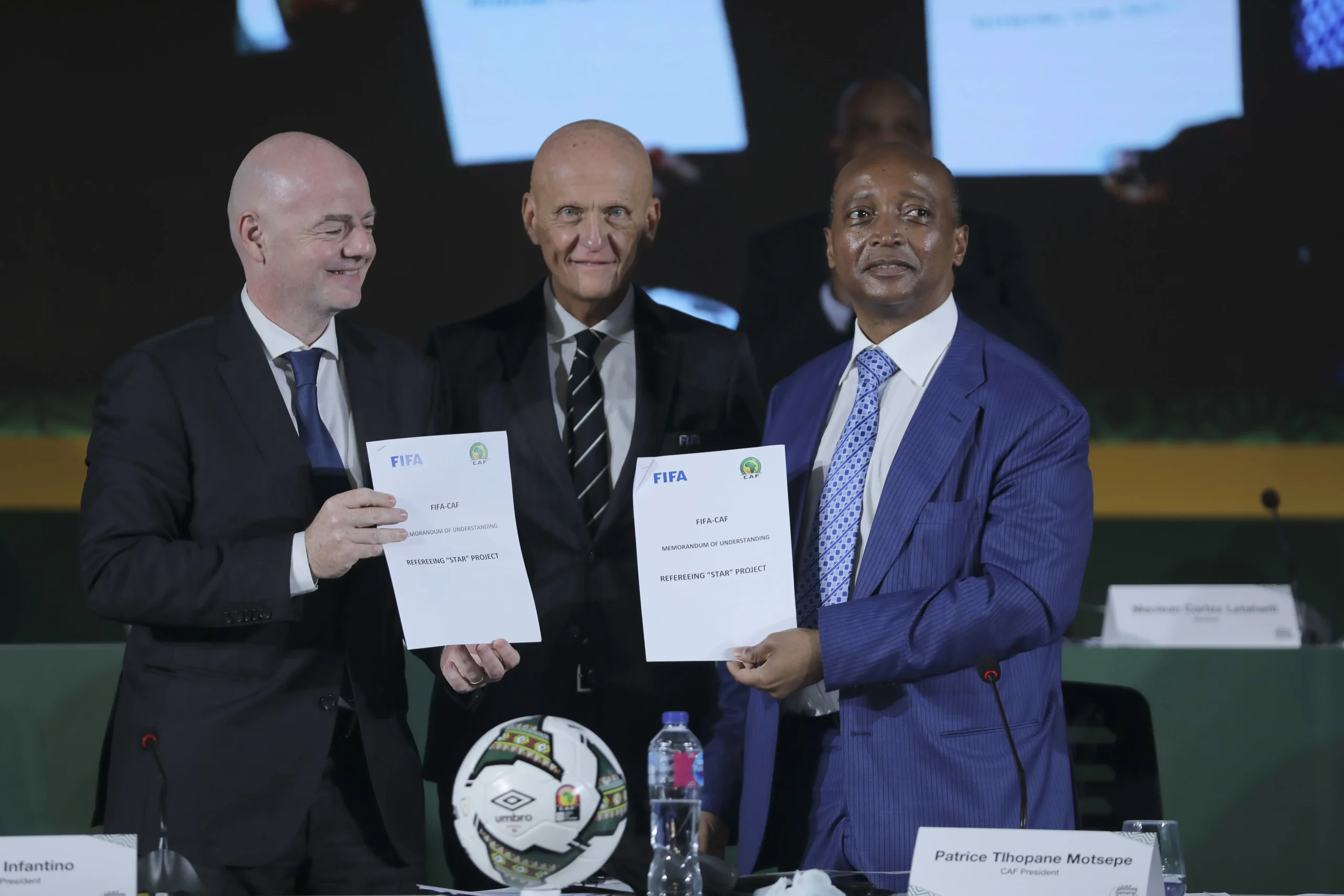
Yet the most troubling developments this week lie not on the pitch but in the administrative corridors of continental football. The ongoing tensions between Morocco and Senegal have exposed deep fault lines within the Confederation of African Football (CAF). Senegal rightfully won the 2025 Africa Cup of Nations-a legitimate achievement that should have secured their celebratory momentum and planned festivities in Paris. However, this accomplishment has become entangled with Morocco’s fierce opposition, as the North African nation now seeks to challenge Senegal’s victory through what many observers describe as fraudulent and corrupt maneuvering.
The dispute intensified when Senegal appealed to the Court of Arbitration for Sport (CAS) under FIFA, while CAF suspended its proceedings pending the outcome of the FIFA arbitration. This judicial intervention has so far created uncertainty, as many perceive the case to remain unresolved and the core concerns unaddressed. Speculation continues about whether Morocco will respect the forthcoming ruling or attempt to influence the outcome through backroom maneuvers. Should the FIFA verdict be disregarded or rendered unenforceable, it could set a dangerous precedent, effectively opening the door to institutional corruption within the region’s football administration.
Observers warn that such an impasse threatens to plunge continental football into a “dark age.” When federations engage in open conflict, judicial rulings are questioned, and competition integrity is compromised by fraudulent practices and backroom maneuvering, the very foundation of the sport erodes. Urgent intervention from FIFA and a radical restructuring of governance protocols are needed to restore credibility. Without decisive action, the administrative side of the game in this part of the world risks becoming synonymous with chaos and corruption, overshadowing the undeniable talent and passion that define its footballing culture.
None of this can be separated from the fan dimension, which grants football its deepest meaning. Throughout the week, everyday spaces-cafés, living rooms, public squares-transform into vibrant extensions of stadiums. Here, collective anticipation and emotional engagement unfold, reminding us that football remains a form of soft power capable of transcending divisions. It creates common ground where cultures and languages converge under a unified passion.
Ultimately, this week is far more than a segment in a crowded calendar. It is a comprehensive footballing experience that captures both the complexity and the beauty of the game. Between the precision of qualification battles, the subtlety of preparation, the presence of stars, the accountability of medical departments, the fight against administrative corruption, and the influence of fans, one enduring truth stands clear: football is not only what is played, but what is understood-and what is built upon it for the future.

Subscribe to Our Newsletter
Keep in touch with our news & offers